Hacking HR: What Happens When AI Changes the Rules of Hiring?
AI is no longer something sitting on the edge of the recruitment process.
It's now embedded in almost every stage of hiring.
From AI-generated resumes and cover letters to interview coaching tools, deepfakes, synthetic identities, and automated candidate outreach, the hiring landscape is changing faster than most organisations can adapt.
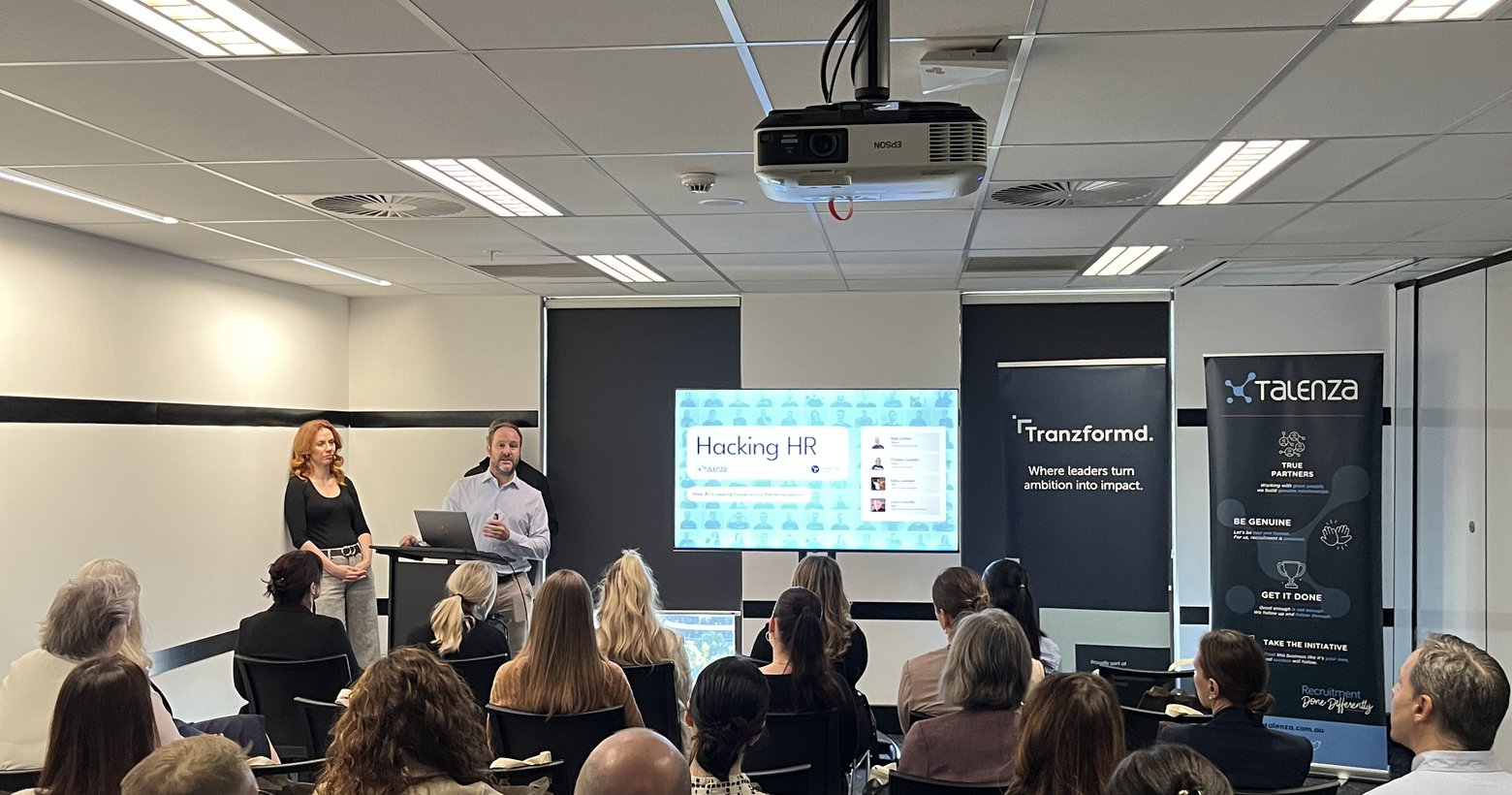
That was the focus of our recent Hacking HR breakfast in Brisbane, where HR, Talent Acquisition and Security leaders came together to discuss how AI is reshaping recruitment and what organisations need to do next.
Featuring insights from Liam Connolly (CISO, SEEK) and Kelsy Luengen, the conversation explored the intersection of technology, human behaviour and trust in the hiring process.
Key Takeaways from Hacking HR Brisbane
For organisations navigating AI in recruitment, the event highlighted three core realities:
- The Double-Edged Sword: AI accelerates screening and administrative efficiency, but it simultaneously expands an organisation's threat landscape via sophisticated application fraud.
- The Trust Deficit: Traditional assessment methods (like unverified CVs and standard video interviews) are no longer foolproof due to real-time AI coaching and deepfakes.
- The Solution: Recruitment is no longer just an HR function; it requires a cross-functional alliance between People, Tech, and Security teams to ensure human-led, AI-enabled hiring.
The challenge isn't AI. It's what AI is changing.
One of the strongest themes from the morning was that AI is creating both opportunity and risk at the same time.
There's no question AI is changing what's possible in hiring. But it's also creating problems that weren't anticipated and expanding the threat landscape in ways many organisations are only just waking up to. The businesses getting this right are treating AIas a tool, not a replacement for human connection and judgement, which remain critical to an effective process, a strong candidate experience, and sound risk management.
On one hand, organisations are using AI to improve efficiency, accelerate screening, enhance candidate experiences and reduce administrative burden.
On the other, candidates are becoming increasingly sophisticated in how they use AI throughout the hiring journey.
Applications can be tailored in seconds. Interview responses can be coached in real time. Written assessments can be generated instantly. Professional profiles can be enhanced beyond recognition.
As one attendee reflected:
Candidates are using AI tools more throughout the hiring process, making it harder for recruiters and hiring managers to identify genuinely qualified people beyond polished applications and AI-generated responses.
The result is a growing challenge for hiring teams:
How do you distinguish capability from presentation?
Hiring has become a trust problem
The discussion moved well beyond recruitment technology and into something more fundamental: trust.
Can we still trust a CV?
Can we trust a video interview?
Can we verify that the person presenting on screen is the same person who will ultimately perform the role?
These questions may have sounded extreme only a few years ago. Today, they are becoming increasingly relevant.
Liam shared examples of how threat actors are targeting recruitment processes and HR systems, while Kelsy explored how candidate behaviour is evolving as AI becomes normalised.
What emerged was a clear picture that recruitment is no longer just a people process.
It's increasingly a behavioural challenge, a security challenge and a business risk challenge.
As several attendees noted, HR teams are finding themselves on the frontline of issues that traditionally sat elsewhere in the organisation.
The human element is becoming more valuable, not less
Perhaps the most reassuring takeaway from the session was that AI is not making human judgement obsolete.
It's making it more important.
Across the room there was strong agreement that while technology will continue to improve, organisations cannot automate trust.
The best recruiters, hiring managers and HR leaders are already adapting by focusing more heavily on:
- Critical thinking over process compliance
- Verification over assumption
- Genuine candidate engagement over transactional assessment
- Human judgement alongside technology-enabled decision making
One attendee summed it up simply:
The human element remains critical to the hiring process — not only for a better candidate experience, but to help mitigate risk.
Another added:
It's a good reminder to balance technology with human judgement, critical thinking and genuine candidate engagement.
What organisations should do next
While there is no single solution, a number of practical themes emerged from the discussion:
Review hiring processes through an AI lens
Many recruitment processes were designed before AI became a daily tool for candidates. Organisations should revisit assessments, interviews and verification steps to ensure they remain fit for purpose.
Focus on signal quality
As AI increases the volume and polish of applications, identifying meaningful indicators of capability becomes more important than ever.
Strengthen collaboration between HR, Talent and Security
The most resilient organisations are increasingly treating hiring as a shared responsibility between people, technology and risk functions.
Invest in interviewer capability
The ability to probe, challenge, build rapport and assess authenticity is becoming a critical skill for hiring managers and recruiters.
The future of hiring is human-led and AI-enabled
The message from the morning wasn't that AI is ruining recruitment.
Far from it.
AI will continue to create enormous opportunities for organisations and candidates alike.
But as technology changes the way people present themselves, communicate and engage with employers, organisations will need to rethink how they assess talent, build trust and make hiring decisions.
The future of hiring won't belong to organisations that resist AI.
It will belong to those that understand its strengths, recognise its risks, and combine technology with better human judgement.
Thank you again to Liam Connolly and Kelsy Luengen from SEEK for sharing their expertise, and to everyone who joined the conversation.
The discussion reinforced something we see every day at Talenza:
The tools may change, but great hiring will always be about understanding people.
If you’d like to get a deeper understanding of how your Cyber, Tech, and HR /TA teams can work better together, please reach out to Chelsey Costello or Matt Cotton.